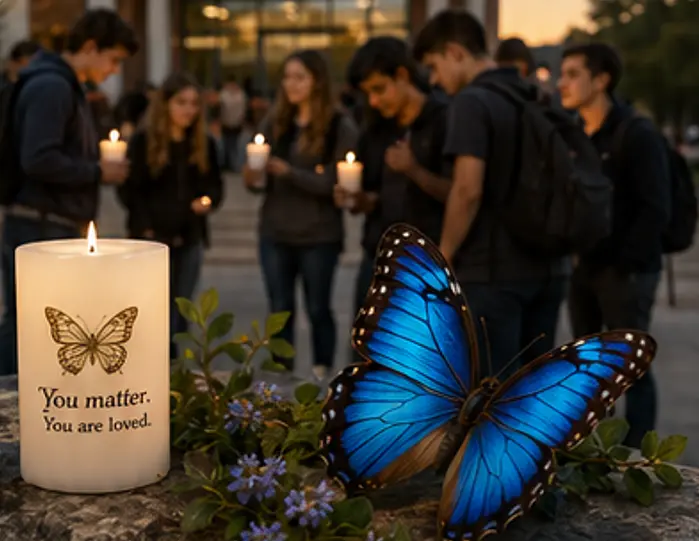
Naming the problem is the first step toward solving it.
The Origin of ‘Bullycide’
The term “bullycide” was coined by Neil Marr and Tim Field in their 2001 book Bullycide: Death at Playtime.
It combines “bullying” and “suicide” to describe taking one’s own life as a direct or indirect result of being bullied.
Their work gave a name to a phenomenon that had long existed but was rarely acknowledged.
They argued that bullycide is not a personal failure of the victim, but a systemic failure of the institutions meant to protect them.
Coined in 2001
Names the link
between bullying and suicide
Demands
accountability
The Scale of the Crisis
Sources: CDC Youth Risk Behavior Survey, StopBullying.gov, American Foundation for Suicide Prevention
4,600+
Young lives lost to suicide each year in the U.S.
14%
Of high school students have considered suicide.
7%
Have attempted suicide one or more times.
56%
Increase in youth suicide rates over the past decade.
19%
Of students report being bullied at school.
15%
Of students report being cyberbullied.
How Bullying Impacts Genders Differently
Bullying does not look the same for everyone. Understanding these differences is critical to effective intervention.
Boys & Young Men
More likely to experience physical bullying and direct threats
Less likely to report bullying or seek help due to social stigma
Higher rates of completed suicide after bullying harm
More likely to externalize pain through aggression or substance use
Bullying around perceived masculinity, sexuality, or physical ability
Higher risk of gang recruitment as a protection response
Girls & Young Women
More likely to experience relational aggression, exclusion, rumors, social manipulation
Higher rates of cyberbullying, especially through social media
Higher rates of suicide attempts, though lower completion rates
More likely to internalize pain through depression, anxiety, and self-harm
Bullying around appearance, social status, and relationships
Higher vulnerability to eating disorders and body image crises
Why This Word Matters
‘Bullycide’ is not just a word.
It is a demand for accountability.
When we name the cause, we can no longer look away. We can no longer call it “just kids being kids.” We can no longer pretend the systems in place are enough.
Every bullycide is preventable. Every one represents a failure — of schools, of communities, of adults who see the signs and did nothing. This site exists because naming the problem is the first step toward solving it.